How a 40,000-Hour Trio Controls a Rust Server on a Fresh Wipe in 2026
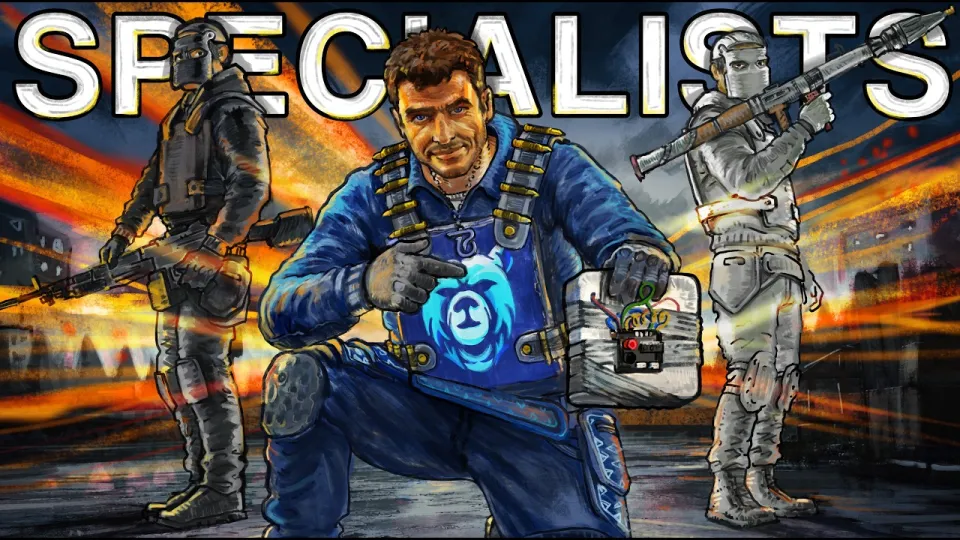
Video: How a 40,000-Hour Trio CONTROLS a SERVER - Rust
You can order the same kind of articles for your own video to boost it on YouTube and Google. Just message the Telegram bot @sat_sit_bot. Articles with your video embedded are written and posted by the bot itself — on popular topical sites (no ads). Free trial — 50 articles.
· based on the channel Blooprint
A trio with roughly 40,000 combined hours controls a Rust server by converting a quiet fresh-wipe start into an early snowball: they farm faster than the lobby, take monuments and fights before neighbors are geared, and then spend the rest of the wipe raiding the competition so nobody else gets to scale. That is the arc Blooprint, Disfigure and Nine run through on a 500+ population server, and you can watch the whole thing live on Blooprint's Twitch channel when he streams the next wipe.
What a 40,000-hour trio actually means on a fresh wipe
Hours are not a flex on their own; in Rust they translate into decisions made in the first hours that most players make in the first days. A 40,000-hour trio does not need to win every aim duel, because it wins the economy: who has a workbench, who has a furnace base running, who knows which monument is contested and which is free.
On a 500+ pop server the map is crowded, so the trio's advantage compounds differently than on a low-pop server. More players means more free loot moving around, more half-built bases to raid, and more chances to convert a single good fight into a full kit. The video's premise is exactly that: no grand ambition at the start, then a rapid climb to dominating the server and raiding everyone in reach.
The snowball: from a quiet start to server dominance
The snowball in Rust is a loop, and the trio runs it in a fixed order:
- Secure a base location that is defensible but close enough to a monument to farm it repeatedly.
- Push the first workbench tier and a reliable gun before the neighbors finish their starter bases.
- Convert early fights into kits, then use those kits to farm monuments that would otherwise be too dangerous.
- Raid the nearest competition before they can build up, so the gap widens instead of closing.
- Keep roams constant so the server's other groups never get a free farming window.
That last point is where most groups fail. A trio that stops roaming to sit on loot gives every other team time to catch up, and on a high-pop server the catch-up happens fast. Blooprint's group keeps the pressure on, which is why the wipe reads as control rather than a lucky start.
Gear fear is the real dividing line
One of the most telling details in the audience reaction is how many viewers praised players who take an M2 out of the base instead of leaving it in a box. Gear fear, the habit of saving the best weapons for a fight that never comes, is the single biggest difference between a group that controls a server and a group that merely survives on it.
A trio with this much experience treats high-tier guns as tools, not trophies. An M2 or an L9 in a box does nothing; in a roam it can end three enemy kits in a minute and pay for itself several times over. The flip side is that losing a full kit hurts, so the discipline is in when to roam and when to hold, not in whether to use the gear at all. Viewers who remember Blooprint's older wipes noted how nostalgic it felt to see him roaming with an M2 and an L9 again, taking real risks instead of playing safe.
Online raids and the psychology of a server
Raiding an online opponent is the most expensive thing a trio can do, and it is also the fastest way to change how a whole server behaves. An online raid forces the defenders to fight from a disadvantage, but it also costs explosives, time and exposure, because every raid is a beacon for third parties.
A few practical rules separate a clean online from a disaster:
- Scout the base and count doors before you craft a single rocket or C4; wasted explosives are the most common raid loss.
- Bring more boom than you think you need, plus a fallback plan for a counter-raid.
- Assign roles: one player breaches, one watches the flanks, one manages loot runs back to base.
- Expect the counter. On a crowded server, a raid that drags on becomes a fight on two fronts.
The human side matters just as much. In one defense sequence a raider jokes about having his mouth full of a burrito while his base is being wiped, which is the most honest picture of online raiding you will get: chaos, half-eaten food, and a group scrambling to hold a base they thought was safe.
Why viewers who never played Rust still follow the story
Rust content has an unusual audience: a large share of viewers have barely touched the game, yet they follow wipes like a series. The reason is that a good Rust video is a story with stakes that are easy to understand, a base, gear, a grudge, and a revenge arc, without requiring any knowledge of recoil patterns or building costs.
That is also why a stray moment lands harder than a kill: a horse kicking a minicopter out of the sky gets more laughs than any raid, because it needs no game knowledge to be funny. The trio format helps here. Three personalities with distinct roles, one pushing fights, one farming and one commenting on the chaos, read as characters, not just players.
Common questions about high-pop trio wipes
Newer players watching a 500+ pop wipe usually run into the same doubts, and they are worth answering directly rather than treating as trivia.
Is a trio actually better than a larger clan? A trio farms slower than a ten-man, but it moves faster, trusts everyone in the group, and can raid without splitting loot ten ways. On a crowded server a tight trio often out-paces a disorganized clan.
How do you deal with lurkers who suddenly have top gear? Suspicion is healthy. When neighbors who were farming with bows suddenly roam with M2s, the usual explanations are a lucky monument run, a trade, or someone else's raid going wrong. Treat them as dangerous until proven otherwise and keep your best kits moving, not stored.
What should a small group do after a big online raid? Repair, restock explosives, and expect a counter within the hour. The most dangerous moment in a wipe is right after a successful raid, when the group is tired and the base is full of new loot.
Useful links
- Blooprint on Twitch — live wipes and streams
- Blooprint on Kick — alternative stream
- Blooprint on TikTok — clips and highlights
- Blooprint on Twitter — wipe announcements
- Blooprint's Discord — community and server talk
Final thoughts
A 40,000-hour trio does not control a server with aim alone; it controls the server by never giving anyone else time to catch up, by using top-tier gear instead of hoarding it, and by turning every fight into more economy. The Blooprint wipe shows the pattern clearly: a quiet start, a fast snowball, and then raids on everyone in reach until the lobby belongs to one group. If you want to see that loop happen live, follow Blooprint on Twitch and watch the next fresh wipe from hour one. The channel Blooprint is the author of this breakdown and the source of the footage discussed here.
Key takeaways
- Blooprint, Disfigure and Nine bring roughly 40,000 combined hours into one trio on a 500+ population server.
- The wipe begins with no big plan and escalates into raiding the server's competition.
- Top-tier gear returns to the roams: M2 and L9 fights are back in the trio's hands.
- Online raids drive the story, including a defense where a raider admits he was eating Chipotle mid-fight.
- Lurkers who suddenly roam with M2s raise suspicion about how they got that gear.
Questions & answers
How many hours do Blooprint, Disfigure and Nine have in Rust combined?
The video frames the group as a 40,000-hour trio, meaning roughly that many hours of Rust experience shared across the three players. That level of playtime shows up less in raw aim and more in fast early-wipe decisions, monument knowledge and raid planning on a 500+ population server.
Why do viewers praise players who roam with an M2 instead of storing it?
Because gear fear loses wipes. A high-tier gun left in a box earns nothing, while the same gun in a roam can end several enemy kits and pay for itself. Taking risks with good gear is what separates a group that controls a server from one that just survives on it.
What does it take to run an online raid as a small trio?
Scout the base and count doors before crafting explosives, bring more boom than you expect to need, and split roles between breaching, watching flanks and moving loot. Always plan for a counter-raid, because on a crowded server a long raid quickly turns into a fight on two fronts.
Is a big Rust video still watchable if you have never played the game?
Yes. Rust wipes work as stories with clear stakes, a base, gear, grudges and revenge, so no knowledge of building costs or recoil is required. Funny accidents, like a horse flipping a minicopter, land with everyone regardless of experience.
Source: How a 40,000-Hour Trio CONTROLS a SERVER - Rust · Markdown version